
Some retailers go looking for crypto payments. For Ashluxe, the customers came first.
Ashluxe’s buyers include local crypto holders, diaspora customers, foreign visitors and influencers. These are people who already hold stablecoins and would rather pay with them than convert to naira, hunt for a POS agent or carry cash. A store that can’t take their payment loses the sale.
Ashluxe came to Tender, and since 2025 its Lekki store has accepted crypto at the till through a Tender POS. Here is how it works and what it has meant for the business.
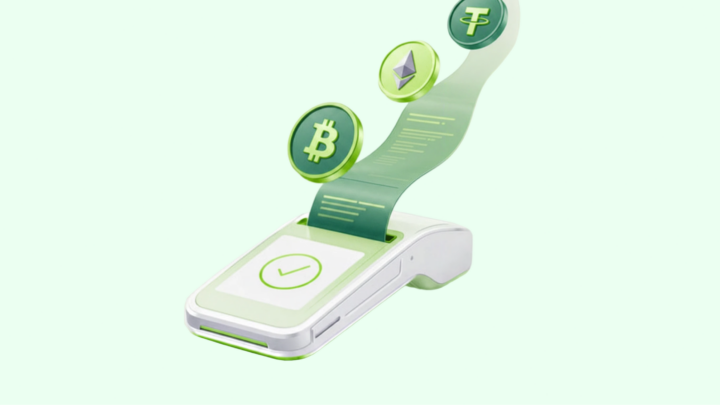
Quick answer: Ashluxe accepts crypto in its Lekki store through Tender’s In-Person Outlet, a POS device that shows the amount, generates a QR code, and lets customers pay by scanning it or tapping an NFC-enabled phone. Payments land in Ashluxe’s Tender wallet, and Ashluxe keeps them as crypto instead of converting to naira. Since 2025, the store has processed an estimated $200,000 or more in crypto payments.
Who is Ashluxe?
Ashluxe was founded in Lagos in 2018 by Yinka Ash. The brand blends Nigerian streetwear with high-end fashion, from signature jerseys and slides to denim, shirts and accessories, and it ships to Nigeria, the UK, the US and South Africa.
That mix of Lagos, London and international buyers is the kind of customer base where payment friction shows up fast: high-value baskets, buyers who may not hold a Nigerian bank account, and customers who hold dollars or stablecoins instead of naira.
Why would a luxury retailer accept crypto?
For Ashluxe, the reason was demand. Its target customers include:
- Local crypto holders who want to spend what they hold
- Diaspora customers home for visits or buying for family
- Foreign visitors whose cards are often declined on local terminals
- Influencers who are active in crypto communities
Nigeria ranked 6th globally in Chainalysis’s 2025 Global Crypto Adoption Index, so this isn’t a niche audience. Our 2026 data breakdown covers what it means for merchants.
There is also a risk benefit for a high-ticket retailer. Card payments from foreign issuers can be disputed weeks after a sale, and a confirmed on-chain payment can’t be reversed by a bank. We cover that in how Nigerian businesses can prepare for crypto payments this Detty December.
How does the setup work?
Tender calls each way of accepting payments an Outlet. For a physical store, that’s the In-Person Outlet:
- Create an account and complete KYC. Approval takes about 24 hours.
- Request hardware. There’s a “Request Hardware” button in the dashboard, and POS devices ship globally on request.
- Set up the In-Person Outlet in the dashboard.
- Train staff and run a test payment before the first live customer.
What does a payment look like at the till?
The POS is a standard device with a screen. At checkout:
- The cashier enters the amount, and the POS displays it.
- The customer selects a blockchain (options include Bitcoin, Ethereum, Solana, Polygon, TRON, TON, Stellar and more).
- The customer selects a token, such as USDT.
- The POS shows the exact crypto amount and a QR code.
- The customer scans the QR code with a wallet app, or taps an NFC-enabled phone on the device.
- The payment confirms on-chain, in between one minute and two hours depending on the chain.
- A receipt is available.
For customers who pay in crypto regularly, tap-to-pay makes the experience feel closer to a contactless card payment than to a technical transfer.
What changes for the business?
A payment method the target customer already uses. Customers can pay in any of 300+ crypto assets across 20+ blockchains, so a buyer visiting from London or a local holder doesn’t need a card or a Nigerian transfer.
No reversal window. A confirmed on-chain payment can’t be pulled back by an issuing bank. Refunds are the merchant’s decision, handled directly with the customer.
Settlement on the merchant’s terms: Payments land in the Tender wallet, which holds individual token balances and shows the total value in USD. Merchants can withdraw as fiat (naira, or any of 16+ settlement currencies, with USD for the rest) or as crypto to their own wallet. Ashluxe keeps its crypto rather than converting it, which makes the wallet work as a lightweight treasury: Ashluxe decides when and how to cash out. If you’re thinking about where to hold balances, see custodial vs non-custodial wallets. For merchants who do convert, see how crypto payment settlement actually works.
Big transaction friendly fees: Tender charges 2% per transaction, capped at $100. On any sale above $5,000, the fee stops growing.
A clear record: Every payment appears in the dashboard and leaves a transaction hash on the blockchain.
Results so far
Since going live in 2025, Ashluxe’s Lekki store has processed an estimated $200,000 or more in crypto payments through the Tender POS. Those payments came from the customer mix above: local crypto holders, diaspora buyers, foreign visitors and influencers.
What can other retailers take from this?
- Start with the customers you already have. If your audience holds crypto, a POS that accepts it recovers sales you were losing at the till.
- Choose the channel that matches how you sell. A physical store needs the POS. An online store can use the Online Outlet, and sellers who close deals in DMs can use Social Payments over WhatsApp.
- Decide what you’ll do with the balance. You can convert to naira, keep crypto, or split it. You choose, and you can change it later.
- Train staff before launch. Agree that “paid” means confirmed on the device, never a screenshot.
For more examples, see our 10 real-life use cases of crypto payment gateways.
Frequently asked questions
Can a retail store in Nigeria accept crypto at a POS?
Yes. A retailer can accept crypto in-store through a payment gateway with POS hardware. Nigerian law doesn’t prohibit businesses from accepting crypto, and our legality guide covers the detail.
Do customers need to be crypto experts to pay?
No, but they do need a crypto wallet. They scan the QR code or tap an NFC-enabled phone, and the payment goes through from their own wallet.
Do I have to convert crypto to naira?
No. You can withdraw as fiat to your bank account, withdraw as crypto to your own wallet, or keep balances in your Tender wallet, as Ashluxe does.
How long does a payment take to confirm?
Between one minute and two hours, depending on the blockchain the customer chooses.
How do I get a Tender POS device?
Create an account, complete KYC, and use the “Request Hardware” button in your dashboard. Devices ship globally on request.
If your customers already hold crypto, give them a way to pay at your till. Create your Tender account and request your POS device.